What Continuation Patterns Actually Show
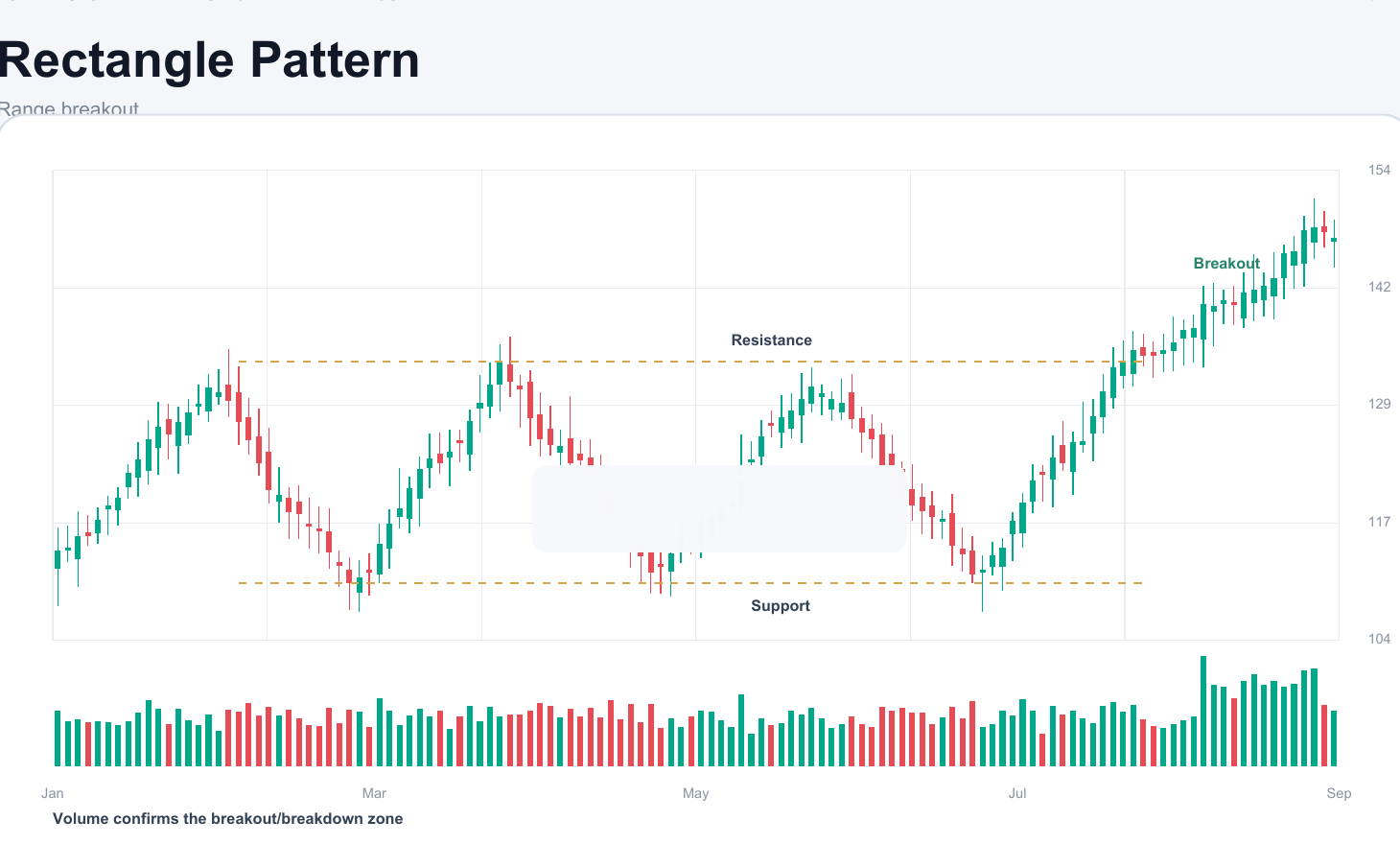
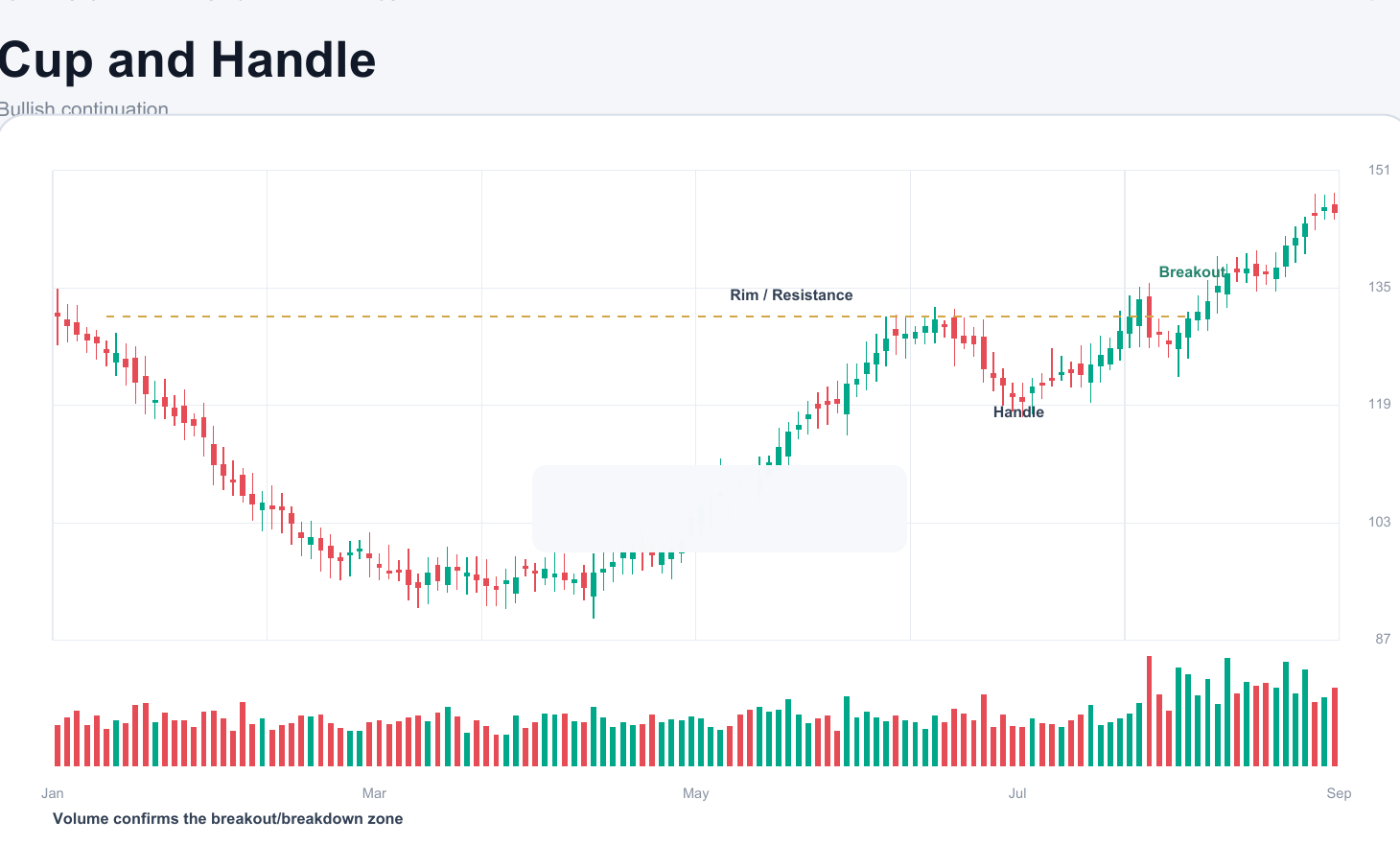
Continuation patterns yeh suggest karti hain ki dominant trend shayad immediately end nahi ho rahi, bas temporary pause me hai. Rectangles, cup and handle structures, kuch triangles, flags aur pennants sab is broader idea ke andar aate hain.
Yahan important phrase 'may be' hai. Har pause continuation nahi banti. Sideways phase reversal build-up, transition phase ya noisy trap bhi ban sakti hai.
Isi liye continuation patterns ko hamesha prior move ke saath read karna chahiye. Strong prior impulse ke bina pattern me woh energy hi nahi hoti jo good continuation setups ko usually chahiye hoti hai.
Yahan ek simple investor-level comparison helpful hai. Agar koi stock weeks tak steadily chadhe, fir tight band me pause kare, aur lag raha ho ki institutions distribute karne ke bajay hold kar rahe hain, to pause constructive ho sakti hai. Lekin agar wahi stock long-term resistance area me pahunch chuki ho aur pause ke dauran chhoti rises par bhi heavy selling aane lage, to continuation case kaafi weak ho jati hai.
How Continuation Structures Form
Zyada tar continuation structures impulse move ke baad begin hoti hain. Price ek direction me strongly travel karti hai, fir profit booking, hesitation ya temporary balance ki wajah se calmer phase me chali jati hai.
Bullish continuation me pullback usually controlled hota hai, violent nahi. Bearish continuation me bounce weak hoti hai aur zyada ground reclaim nahi kar pati. Pause ki quality kai baar pattern ke label se zyada important hoti hai.
Example ke liye agar stock 200 se 235 tak bhaage aur fir 229 se 234 ke beech low aggression ke saath drift kare, to pause continuation idea support kar sakti hai. Agar pause deep aur erratic ho jaye, to setup weak pad jata hai.
Breakout, Retest and Reward Space
Continuation pattern tab actionable banti hai jab uski boundary ya trigger level enough quality ke saath break kare. Is quality me strong close, decent follow-through aur aisi volume shamil ho sakti hai jo dead na lage.
Retests beginners ke liye clarity improve kar sakte hain. Rectangle breakout jo later old resistance ko support ki tarah respect kare, usse evaluate karna aksar us breakout se aasaan hota hai jo bina pause ke seedha bhaag jaye.
Reward space yahan bhi matter karti hai. Breakout technically valid hone ke baad bhi setup average ho sakta hai agar major resistance uske just upar baithi ho. Pattern success aur trade quality hamesha same cheez nahi hoti.
Bahut beginners sirf yeh poochte hain ki breakout hui ya nahi. Better question yeh hota hai ki breakout decision zone ke upar hold kar pa rahi hai ya nahi. Holding behaviour kai baar fast reaction se zyada capital save karti hai.
When Continuation Should Not Be Used Alone
Continuation patterns weak tab pad jati hain jab prior trend already exhausted ho, broader market unstable ho, ya volume badly dry up kar jaye. Aise cases me pattern shape survive kar sakti hai, lekin uske peeche conviction survive nahi karti.
Simple comparison helpful hai. Strong continuation setup me clear prior impulse, orderly pause aur usable space me breakout hota hai. Weak continuation me tired prior move, messy pullback aur direct resistance me breakout hota hai.
Yahin risk management connect hoti hai. Agar logical stop available reward ke hisaab se bahut wide ho, to setup educationally interesting ho sakti hai lekin practically weak reh sakti hai.
Continuation setups ko market alignment se bhi benefit milta hai. Agar stock upward continue karne ki koshish kar rahi ho lekin sector index sharply roll over kar raha ho, to chart phir bhi work kar sakti hai, lekin headwind real hoti hai aur confidence ko affect karni chahiye.
Common Beginner Mistakes
Pehli mistake har sideways move ko continuation maan lena hai. Bahut moves aisi nahi hoti.
Doosri mistake pullback ki health ignore karna hai. Agar pause aggressive ho, overlap-heavy ho aur prior move ko bahut weaken kar de, to continuation idea ko question karna chahiye.
Teesri mistake breakout ko bahut late chase karna hai jab reward already compress ho chuki ho.
Most Beginners Miss This
Continuation pattern tab strongest lagti hai jab pause ke dauran opposite side ki urgency aur volume dono relatively controlled hon. Controlled pullback aksar clean continuation ka early clue hota hai.