What Flags and Pennants Show
Flags aur pennants short-term continuation structures hoti hain jo usually strong directional move ke baad banti hain. Earlier move ko aksar flagpole kaha jata hai.
Bull flag generally strong rally ke baad controlled pause dikhati hai. Bear flag hard decline ke baad weak rebound dikhati hai. Pennant similar hoti hai, lekin pause tighter converging shape me compress karti hai.
In patterns ka importance simple hai: strong move forever straight line me continue nahi hoti. Market aksar pause karti hai taaki decide kar sake ki kya uske paas abhi bhi strength bachi hai.
Yeh patterns popular isliye bhi hain kyunki yeh fast aur efficient lagti hain, lekin wahi speed beginners ke against bhi kaam kar sakti hai. Quick patterns me sochne ka time kam hota hai, isliye recognition se bhi zyada discipline important ho jata hai.
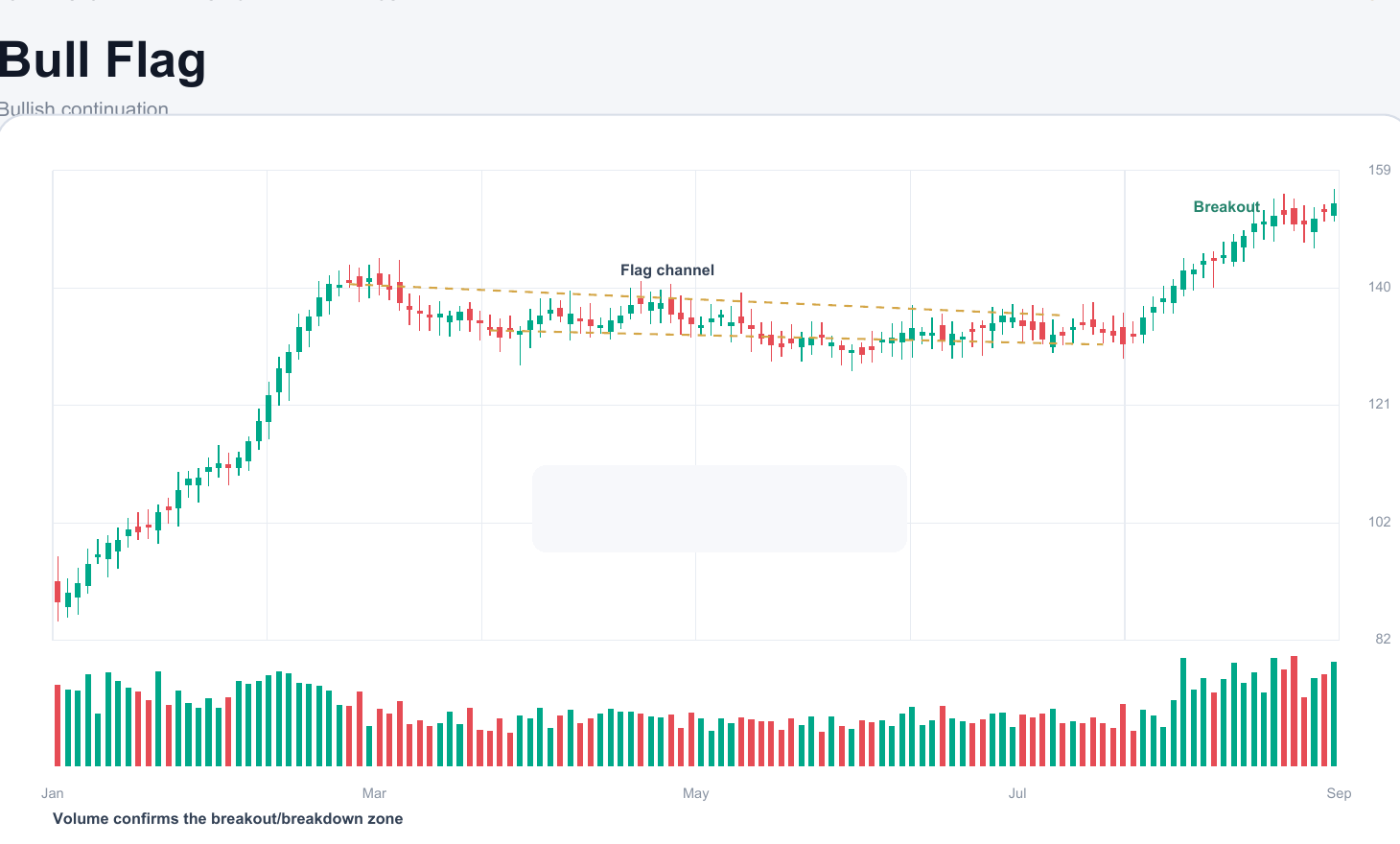
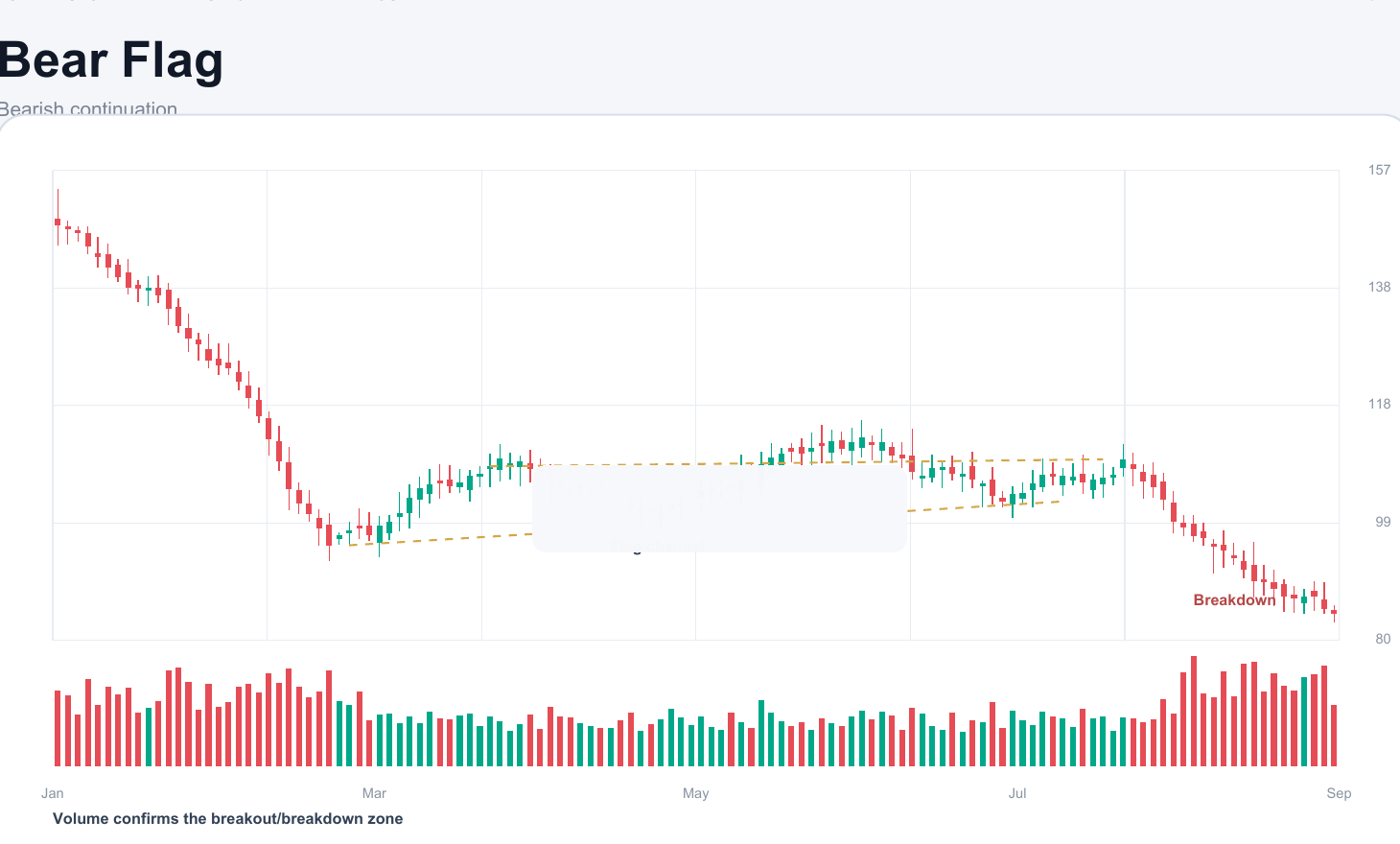
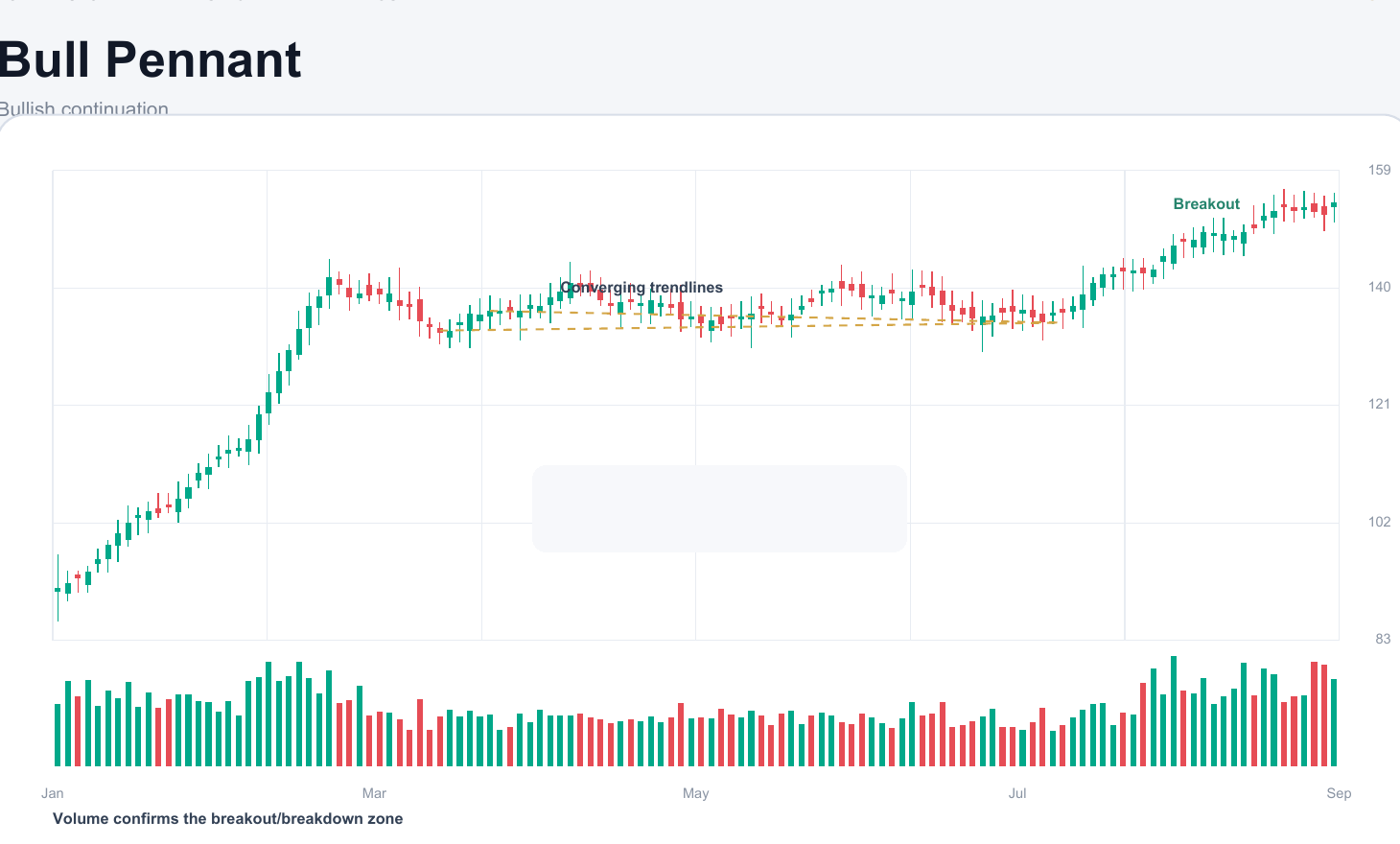
How Fast Moves and Controlled Pullbacks Work
Earlier impulse bahut crucial hai. Real flagpole ke bina pattern apna character lose kar deti hai. Weak move ke baad random sideways action ko utna attention nahi milna chahiye jitna clean expansion ke baad orderly pause ko milta hai.
Healthy bull flag me pullback shallow se moderate hota hai aur overly aggressive nahi hota. Healthy bear flag me rebound usually power lose karta hai aur prior fall ka zyada hissa reclaim nahi kar pata.
Useful comparison yeh hai: agar pause khud prior trend leg se zyada strong lagne lage, to continuation quality likely weak ho rahi hai.
Breakout, Retest and Chasing Risk
Flag ya pennant tab interesting banti hai jab price original impulse ki direction me enough quality ke saath break kare. Good close, follow-through aur decent participation sab help karte hain.
Retests hamesha guaranteed nahi hoti kyunki momentum patterns jaldi expand kar sakti hain, lekin jab retest aaye aur hold kare, tab cleaner educational entry zone mil sakti hai.
Fast-move patterns FOMO create karti hain. Yahin beginners logical support ya resistance se bahut door chase kar lete hain. Pattern kaam kar sakti hai, lekin trade quality poor reh sakti hai kyunki risk-reward already degrade ho chuka hota hai.
Bull flag ke baad strong breakout bhi free pass nahi hoti. Agar breakout candle bahut badi ho aur price already pullback base se kaafi door nikal chuki ho, to trader technically correct hote hue bhi poor location par enter kar sakta hai.
When a Fast Move Is Actually Exhaustion
Har sharp move continuation setup ka start nahi hoti. Kai baar move already overextended hoti hai, panic, late participation ya short covering se driven hoti hai.
Yahin chart context fir matter karti hai. Major resistance me fast move jo heavy excitement ke saath aaye, woh us fast move se different behave kar sakti hai jo sound base se nikli ho aur jiske upar room ho.
Agar pause bahut volatile, bahut deep ya bahut emotional ho jaye, to jo clean flag lag rahi thi woh distribution, trapped participation ya reversal phase ki beginning bhi ho sakti hai.
Fast-move continuation patterns ko exhaustion candles aur climax moves ke saath compare karna chahiye. Agar pattern ke andar aane se pehle hi move emotional aur unsustainable lage, to pause healthy rest ke bajay distribution bhi ho sakti hai.
Common Beginner Mistakes
Pehli mistake har fast move plus sideways action ko flag bol dena hai.
Doosri mistake yeh ignore karna hai ki pullback kitni deep aur kitni aggressive ho chuki hai.
Teesri mistake excitement se entry lena hai instead of planned trigger aur invalidation zone ke saath.
Most Beginners Miss This
Pause ki quality aksar breakout se pehle hi kaafi information de deti hai. Controlled pause usually dramatic pullback se zyada constructive hoti hai.